
IWLCA Recruiting Tournaments
Premier girls' lacrosse events for prospective student-athletes and college coaches
How to record and analyse your game film for recruiting
A strong game film can help a college coach understand your decision-making, work rate and fit before they ever see you play live. For women’s lacrosse athletes, it is more than a collection of goals or big checks. The best recruiting footage shows repeatable skills, intelligent movement and the way you contribute when the ball is nowhere near your stick.
For Australian players, video can be especially valuable because coaches in the United States may be assessing you from several time zones away. A clear highlight reel, supported by full-game footage, gives your performance context and makes it easier for coaches to compare you with athletes from other markets. Whether you play in Melbourne, Sydney, Brisbane, Adelaide, Perth or a regional program, a thoughtful recording and review process can make your film work harder.
Set up a recording plan before game day
Start by deciding what your film needs to prove. A midfielder may want to show transition speed, two-way effort, ground-ball ability and defensive communication. An attacker should capture off-ball cuts, feeding, dodging, shooting under pressure and recovery after a turnover. A defender needs footage of footwork, positioning, adjacent slides, caused turnovers and clear decisions. Goalkeepers should include saves, outlet passing, communication and positioning rather than only spectacular stops.
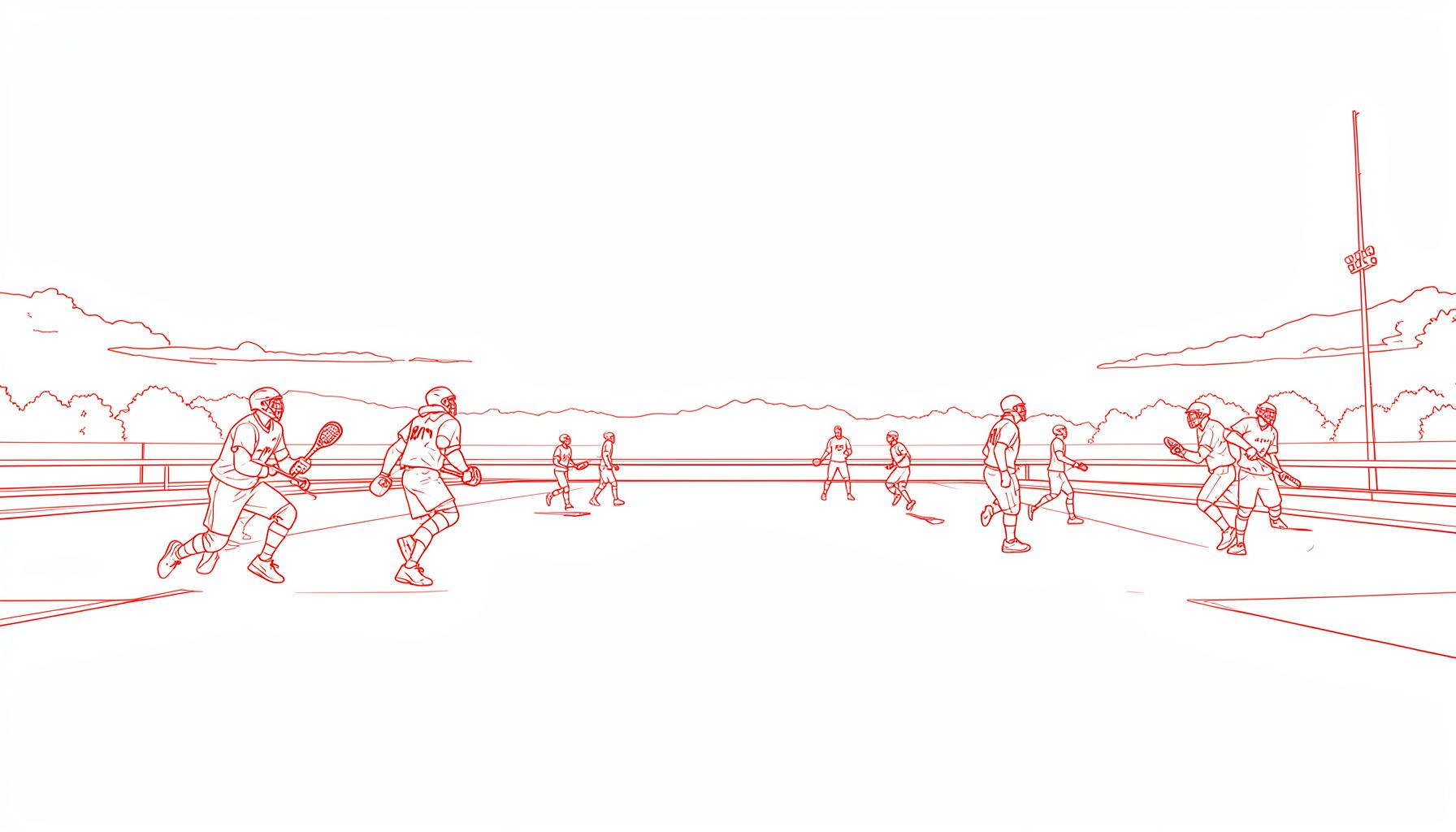
Ask someone to record from a high, stable position near the halfway line, preferably on the side with the clearest view of the attacking direction. A parent, teammate, club volunteer or school staff member can do the job if they understand the plan. Before the match, tell the camera operator your squad number, position and any changes to your usual kit. If numbers are difficult to read, bright tape on a helmet or a contrasting hair tie can help you stand out without distracting from play.
A modern phone can produce useful footage, but stability and visibility matter more than expensive equipment. Use a tripod where permitted, charge the device fully and check storage space before warm-up. Record at the highest practical resolution, then test the angle for a few minutes. Avoid excessive zoom, rapid panning and filming from behind a fence. If the field is large, a wide shot is usually better than a close-up that loses the play before the pass or slide develops.
Check venue rules and obtain appropriate permission before filming. School competitions, club tournaments and representative events can have different policies around minors, spectators and online publication. Keep the original file, and create a private backup after the match. A simple file name such as Surname_Position_Opponent_Date will save time when you are preparing several games for recruiting contacts.
Capture evidence of complete play
Highlight clips should make it easy to identify you within the first few seconds. Begin with your name, graduation year, position, dominant hand, club and contact details. Add a small arrow or circle only when necessary, and remove it as soon as the play begins. If the marker stays on screen throughout the clip, it can cover the stick, feet or passing lane that a coach needs to see.
Choose moments that demonstrate quality rather than simply filling a target length. A goal is useful when it shows the dodge, timing or off-ball movement that created the chance. A caused turnover matters more when the footage reveals your body position, anticipation and next decision. Include successful plays from different quarters and game states, including settled offence, transition, defensive pressure and moments when your team is protecting a lead.
Do not edit out every mistake. A coach evaluating recruiting film knows that no player has a perfect game. One missed pass followed by a smart recovery can reveal composure and effort. A defensive clip may be valuable because it shows you forcing an attacker away from the middle, even if another teammate eventually makes the turnover. Honest context gives the viewer confidence that the film represents your normal game rather than a carefully manufactured sequence.
Create two versions of your footage. The first should be a concise highlight reel, often around three to five minutes, with your strongest examples near the beginning. The second should be one or two complete games or extended sections with minimal editing. Full-game film lets coaches assess positioning, pace, communication and consistency. Put the highlight reel and longer footage in a clearly organised folder, with a short player profile and a match list that identifies your jersey number.
For Australian athletes travelling interstate, keeping files organised is particularly helpful. A tournament in Perth, a school fixture in the eastern states and a representative carnival may all be recorded by different people. Save the original recordings and note the conditions, opponent and your position in each match. If your club has a smaller lacrosse community than a major US school, accurate context can help a coach understand the standard and level of competition.
Analyse what the film actually shows
Watch the first review without pausing. Pay attention to your overall influence on the game: where you stand, how quickly you react, whether you support teammates and how often you are involved in useful actions. Then watch again with a specific theme, such as defensive footwork or transition decisions. This prevents the review from becoming a search for goals and assists alone.
A practical analysis system is to tag each meaningful involvement under four headings: technical execution, tactical choice, physical effort and communication. Technical execution includes catching, passing, shooting, checking and ground-ball technique. Tactical choice covers when you dodge, carry, slide, reset or change the point of attack. Physical effort includes acceleration, recovery runs and competing after a turnover. Communication can be verbal, visual or positional, including directing a slide or creating space for a teammate.
Record both strengths and patterns that need attention. You may discover that your first step is effective from the left but predictable from the right, or that you arrive late to the defensive slide after an unsuccessful clear. Perhaps you make accurate passes but stand still immediately afterwards. These details rarely appear in a statistics sheet, yet they can strongly influence how a coach rates your game intelligence.
Use a simple spreadsheet or notes document to track observations across several matches. Write the quarter, timestamp, situation and action, followed by an evaluation. For example: “Second quarter, 4:18, settled offence, cut behind defender, received pass but rushed shot.” That note is more useful than “improve shooting” because it identifies the decision and the context. After three or four games, recurring themes become easier to separate from one-off errors.
| Film element | What a coach can assess | Useful evidence to include |
|---|---|---|
| Ball skills | Control, speed and reliability under pressure | Passing on the move, catches in traffic, ground balls |
| Tactical awareness | Decision-making and understanding of space | Slides, cuts, resets, transition choices |
| Work rate | Effort beyond the obvious highlight | Recovery runs, riding, off-ball support |
| Communication | Leadership and team connection | Defensive calls, directing teammates, encouraging play |
| Physical profile | Movement quality and competitiveness | Acceleration, balance, contact preparation and endurance |
| Game impact | Consistency across different situations | Settled play, transition, late-game possessions |
Compare your notes with feedback from a club coach or trusted teammate. Ask them to review a few clips without telling them what you intended to show. Their first impression may reveal whether your role is obvious to an outside viewer. An experienced coach can also explain whether a decision was genuinely poor or simply looked unusual because the camera angle missed a supporting run.
Edit footage that coaches can use
Begin the highlight reel with a short identification card. Include your full name, position, graduation year, current club, state and email address. If you are targeting US college lacrosse, add your height and relevant academic information in the accompanying profile rather than crowding the opening frame. Coaches should be able to contact you or find your full-game film without searching through a long description.
Keep clips long enough to show the setup and the result. For an attacking play, that may mean showing the cut, dodge, defensive reaction and finish. For a defensive sequence, show the positioning before the check and what happens after the turnover. A clip that starts after the key decision has already occurred may look impressive but tells the coach very little about your awareness.
Use clean cuts and consistent sound. Music is optional, and it should never compete with the action or hide communication. Avoid dramatic effects, excessive slow motion and repeated clips from the same match. Include a few seconds between plays when needed so the viewer can reset their attention. If the footage is filmed in bright Australian sun, shade and exposure changes may make some sections difficult to see, so check the finished export on both a phone and a laptop.
Your full-game link should be easy to open and labelled accurately. Use a stable video host or shared drive with viewing permissions tested from a different account. Keep a private master copy, then export a smaller version for email or recruiting platforms. A coach may be reviewing footage between training sessions, so a file that loads quickly and plays without special software is more likely to be watched.
Use competition footage that reflects the level you are describing. A representative carnival, state team match or recognised tournament can add useful context, while club games may show a broader range of responsibilities. If an event has a strong profile in the region, linking to its official information, such as the Allianz Championship, can help provide background when you reference where a match was played. Keep the focus on your film, however; an event name cannot replace clear evidence of your performance.
Share film professionally and update it
When contacting a college coach, write a short message tailored to the programme. State your name, graduation year, position, current club and the match or event featured in the video. Mention one specific reason the programme interests you, such as its academic course, playing style or development environment. Include the highlight reel first and a separate link to full-game film. Avoid sending a large attachment unless the coach or platform requests it.
Use a professional email address and check every link before sending. Your subject line should identify the sport and purpose clearly, for example: “Australian 2027 midfielder — game film and player profile.” Keep social media profiles suitable for public viewing, since coaches may look at them alongside your video. Posts showing training habits, team involvement and positive competition behaviour can support the picture created by your film.
Australian recruiting often involves longer travel and fewer opportunities for an overseas coach to watch you live. A coach from the US may not immediately know the difference between school sport, club competition, state selection and a national pathway event. Add a brief explanation where it helps: identify the competition level, your team’s division and your role in the squad. Use familiar local terms such as “uni” when speaking casually with Australian contacts, but keep messages to US coaches clear and professional.
Review the film every few months and replace older clips when you have stronger evidence. Your latest footage should show your current position, number and physical development. Keep a private archive of previous matches in case a coach asks for a specific role or game. If you change clubs, move states or become a specialist in the circle, update the player profile and opening identification card immediately.
Treat video review as part of training rather than a one-time application task. Set one technical goal and one tactical goal after each review, then check the next match for progress. Coaches value athletes who can explain what they see, accept useful feedback and apply it under pressure. That self-awareness can become one of the most persuasive parts of your recruiting story.
Build your next film with intention: record from a clear angle, show complete decisions, analyse patterns across games and send the finished package with accurate context. Prepare one polished highlight reel and reliable full-game footage, then share it with the college programmes and recruiting contacts that match your academic and athletic goals. A well-made video will not speak for every part of your game, but it can open the door for a coach to learn more.
Northeast Showcase
A cornerstone of the IWLCA recruiting calendar, the New England Cup draws teams and coaches to the Northeast for high-level competition and maximum exposure.


Where Champions Compete
A key event in the IWLCA lineup, the Champions Cup facilitates player exposure for college recruitment and features some of the strongest club programs in the nation.
Award-Winning Event
Honored as a 2019 Champion of Economic Impact in Sports Tourism, the Midwest Cup is a premier destination for teams seeking top-tier competition in the heart of the country.


Competition in the Capital
One of the primary IWLCA recruiting events, the Capital Cup provides competitive opportunities for teams in a high-visibility setting that attracts college coaches from across the region.
Elite-Level Matchups
A major stop on the IWLCA schedule, the Presidents Cup has hosted high-profile contests including the U.S. Women's National Team facing UWLX and WPLL squads in 2018.

Contact Us
The IWLCA Tournaments are managed and operated by Corrigan Sports Enterprises. Reach out to Tournament Director Morgan Cook for inquiries.
6725 Santa Barbara Ct, Suite 114
Elkridge, MD 21075
Phone: 410.605.9381
Fax: 410.605.9389
Email: Morgan@iwlcalax.com