
IWLCA Recruiting Tournaments
Premier girls' lacrosse events for prospective student-athletes and college coaches
How to handle mistakes during a recruiting showcase
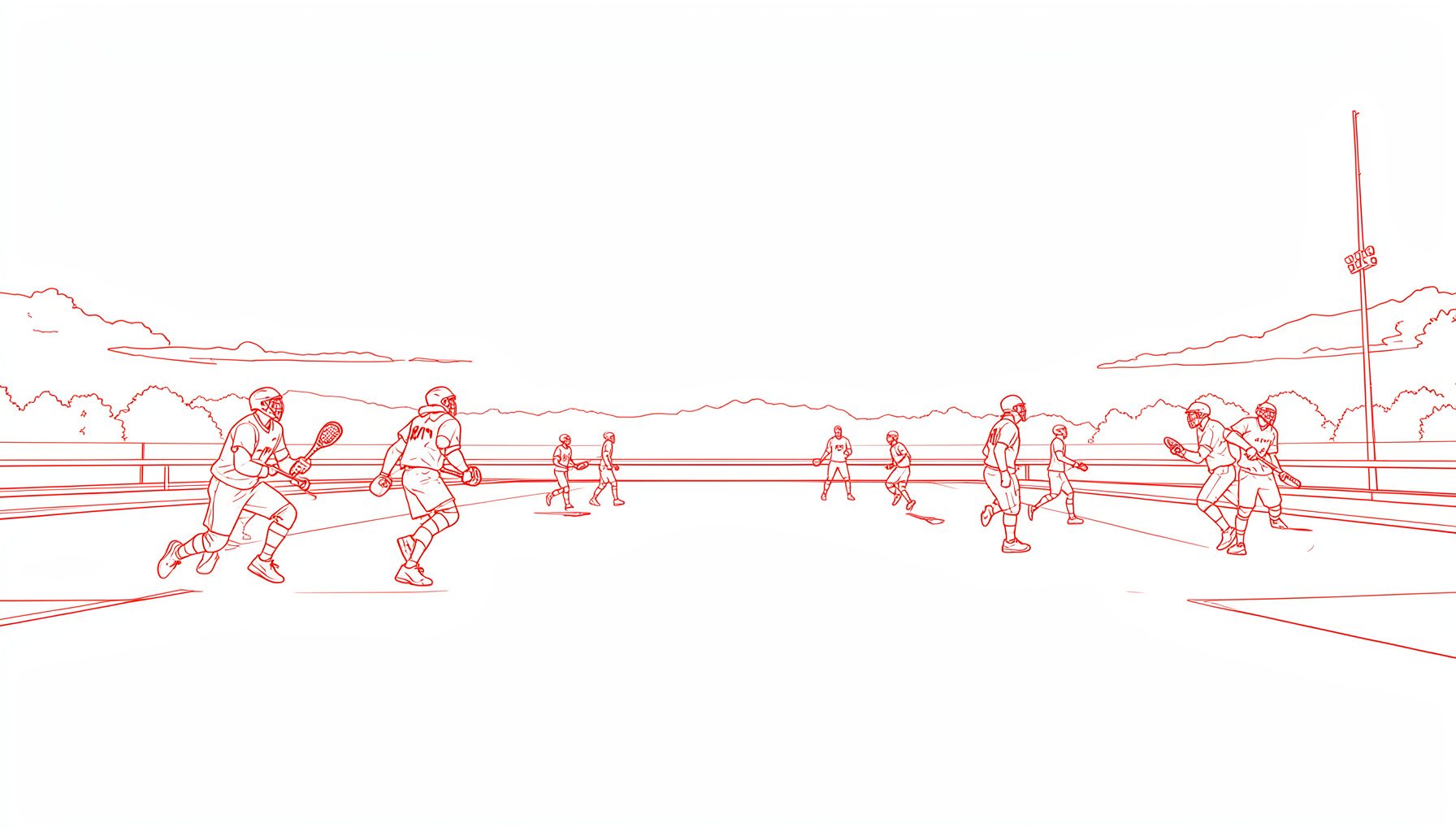
A recruiting showcase can make every dropped pass, missed ground ball and rushed decision feel much bigger than it is. With college coaches watching from the sideline, athletes often believe a single mistake has defined their performance. In reality, coaches are usually assessing how a player responds, communicates and contributes over the full game.
For Australian lacrosse athletes pursuing college opportunities in the United States, the setting may feel especially intense. You could be adjusting to unfamiliar teammates, a faster tempo, different officiating habits and the pressure of being evaluated in a short window. A practical response plan helps you recover quickly, stay visible for the right reasons and show the composure coaches value.
Reset quickly after the mistake
The first few seconds after an error often shape what happens next. If you turn away, drop your head or replay the moment repeatedly, you may remain mentally stuck while the game continues around you. A short physical reset can interrupt that cycle: exhale fully, look toward the next phase of play and give yourself one clear instruction.
Use language that is specific and actionable. “Next play,” “get goal side” or “move the ball early” is more useful than “don’t mess up again.” The aim is not to pretend the mistake did not happen. It is to place it in the past and direct your attention towards the next job.
A missed shot can be followed by immediate defensive pressure. A turnover can be followed by a sprint into the defensive transition. If you have caused the problem, be one of the first players working to repair it. Coaches notice recovery effort because it reveals your habits when the game becomes uncomfortable.
Breathing can also help settle your body. Take one controlled breath through the nose and a longer breath out while moving into position. Athletes who want a more complete pre-game routine can review these practical nerves management tips, then adapt the ideas to their own match-day preparation.
Show coaches how you respond
A recruiting showcase is an evaluation of behaviour as well as skill. A technically gifted player who stops communicating after an error can create uncertainty for a coaching staff. A player who makes a mistake, organises the next defensive set and supports a teammate may leave a stronger impression than someone who plays safely to avoid all risk.
Communication is one of the clearest ways to demonstrate a positive response. If you throw an inaccurate pass, call “my fault” briefly, then provide useful information such as “left shoulder,” “help inside” or “switch.” Avoid a long explanation. Coaches do not need a performance review in the middle of a possession; they need a player who can acknowledge an issue and stay connected to the group.
Body language matters because coaches can see it from a distance. Keep your stick ready, move with purpose and rejoin the structure of the team. Do not wave dramatically at a teammate or show frustration towards an official. In Australia, players might say “no worries” after an error, but the phrase only helps when it is followed by action. Calm accountability is more convincing than forced positivity.
The best response also depends on the type of mistake. If the error came from taking an appropriate attacking risk, do not automatically become passive. If it came from ignoring a simple option, make the next decision earlier and cleaner. A coach is looking for learning within the game, not a player who removes every ambitious part of her style.
Use a simple recovery routine
Before the event, create a three-step reset routine that you can use without thinking. One useful version is recognise, repair and refocus. Recognise the error without judgement, repair the immediate problem through a sprint or communication, then refocus on one role-specific cue. For a defender, that could be “inside help.” For a midfielder, it might be “scan before receiving.” For an attacker, it could be “cut with intent.”
Keep the routine short enough to work during live play. You will not have time to analyse footwork, spacing, stick angle and decision-making while an opponent is carrying the ball. Detailed reflection belongs after the quarter, not during the possession. The faster you return to a simple cue, the less likely one error is to become a sequence of errors.
During a stoppage, use the time deliberately. Check your positioning, communicate with nearby teammates and ask for one piece of information if you need it. Avoid seeking reassurance from every player around you. A composed athlete can take feedback, apply it and remain engaged without appearing dependent on constant direction.
The same principle applies when a teammate makes the mistake. A supportive call such as “we’re good, recover” can keep the unit organised. Blame weakens team performance and can be noticed by coaches who are evaluating leadership. Encouragement should remain practical rather than theatrical: identify the next defensive assignment, support the ball carrier or help the team set up again.
Prepare for the pace and setting
Many Australian athletes attend showcases after playing primarily in local club competitions, school sport or state-level programs. The physical standard may be familiar, but the showcase environment can be different. Games may be tightly scheduled at a large complex, with limited warm-up time, unfamiliar teammates and college coaches moving between fields. Planning for those details reduces the chance that confusion becomes a playing mistake.
Arrive with enough time to check the field layout, confirm your game times and organise equipment before the first whistle. At a venue such as Melbourne’s Footscray Park, Sydney’s smaller suburban grounds or a major tournament site on the Gold Coast, weather and travel can affect your preparation. Heat, wind and long walks between fields may change how you hydrate and warm up. Pack essentials rather than relying on a venue kiosk to have everything you need.
Australian players should also be ready for differences in terminology and tactical expectations. A United States coach may use a familiar concept with different wording, or may expect a quicker substitution and defensive communication style. If you do not understand an instruction, ask briefly during a natural break and repeat the key point back. Clear communication is more professional than pretending to understand and then missing your assignment.
It can help to watch a few minutes of the game before yours if the schedule allows. Notice how quickly the officials restart play, how aggressively teams slide and where the coaches stand. This is not about copying another player. It gives you useful context, allowing you to settle into the rhythm before your own evaluation begins.
Review mistakes without losing confidence
After the game, separate the event from your identity. “I made three poor passes” is information. “I am not good enough for college lacrosse” is an unsupported conclusion. A showcase provides a sample of your performance under pressure, not a final verdict on your potential.
Write down two moments to improve and two moments that showed your strengths. The improvement points should be concrete: “check both shoulders before receiving under pressure” is better than “play smarter.” Strengths might include ground-ball effort, defensive communication, off-ball movement or the way you recovered after a turnover. This balanced review keeps development honest without allowing one error to dominate your memory.
Video can make the review more objective when it is available. Watch the sequence before the mistake, not just the final outcome. Ask whether your positioning, scanning, timing or communication created the situation. Also examine what happened afterwards. A poor pass followed by a strong defensive recovery may reveal a valuable competitive habit that is easy to overlook in a quick self-assessment.
Look beyond lacrosse for examples of athletes who respond well after imperfect moments. A useful set of Liverpool performance insights illustrates how influence can come through decision-making, work rate and leadership across a match, rather than through one spectacular action. The same idea applies at a showcase: your value is built through repeated contributions.
If a coach provides feedback, listen fully before defending the decision or explaining the circumstances. Thank them, identify the adjustment and apply it in the next opportunity. Even when feedback is brief, your response can communicate maturity. Coaches are recruiting future college athletes, and the ability to receive instruction is part of the evaluation.
Your goal is not to eliminate every mistake. Lacrosse is fast, physical and dependent on decisions made under pressure. The stronger target is to make errors smaller, recoveries faster and responses more useful. Before your next event, write your reset cue on a piece of tape inside your kit bag, practise it during training and use it when the moment demands it.
Bring that plan to your next IWLCA recruiting event, compete with intent and let your full performance tell the story. A mistake may be part of the footage, but your response can become one of the clearest signs of readiness for college lacrosse.
Northeast Showcase
A cornerstone of the IWLCA recruiting calendar, the New England Cup draws teams and coaches to the Northeast for high-level competition and maximum exposure.


Where Champions Compete
A key event in the IWLCA lineup, the Champions Cup facilitates player exposure for college recruitment and features some of the strongest club programs in the nation.
Award-Winning Event
Honored as a 2019 Champion of Economic Impact in Sports Tourism, the Midwest Cup is a premier destination for teams seeking top-tier competition in the heart of the country.


Competition in the Capital
One of the primary IWLCA recruiting events, the Capital Cup provides competitive opportunities for teams in a high-visibility setting that attracts college coaches from across the region.
Elite-Level Matchups
A major stop on the IWLCA schedule, the Presidents Cup has hosted high-profile contests including the U.S. Women's National Team facing UWLX and WPLL squads in 2018.

Contact Us
The IWLCA Tournaments are managed and operated by Corrigan Sports Enterprises. Reach out to Tournament Director Morgan Cook for inquiries.
6725 Santa Barbara Ct, Suite 114
Elkridge, MD 21075
Phone: 410.605.9381
Fax: 410.605.9389
Email: Morgan@iwlcalax.com